


Interactive dog toys keep your dog mentally stimulated, physically engaged, and constructively occupied, addressing boredom before it turns into destructive chewing, excessive barking, or other frustration-driven behaviours.
Modern Pets stocks a full range of interactive dog toys Australia-wide, including dog puzzle toys, treat dispensing dog toys, and toys designed to slow down fast eaters and add mental challenge to mealtimes with free metro shipping on orders over $99.
Physical exercise alone doesn't fully satisfy a dog's behavioural needs. Dogs are problem-solvers by nature, descended from working and hunting lineages that required sustained mental effort to find food, track scent, and navigate their environment.
A dog that gets a daily walk but no mental challenge can still become bored, and boredom in dogs commonly shows up as destructive chewing, digging, excessive barking, or attention-seeking behaviour that owners often misread as a training problem rather than an enrichment gap.
Dog enrichment toys address this directly. Veterinary behaviourists increasingly recommend structured mental stimulation (alongside, not instead of, physical exercise) as a core part of managing high-energy or anxious dogs, and as a genuinely effective tool for slowing down fast eaters prone to digestive upset or bloat risk. A 15-minute session with the right puzzle toy can be as mentally tiring for a dog as a much longer walk, which makes interactive toys particularly valuable for high-energy breeds, working dogs without a job to do, or dogs recovering from injury who can't yet manage long physical exercise.
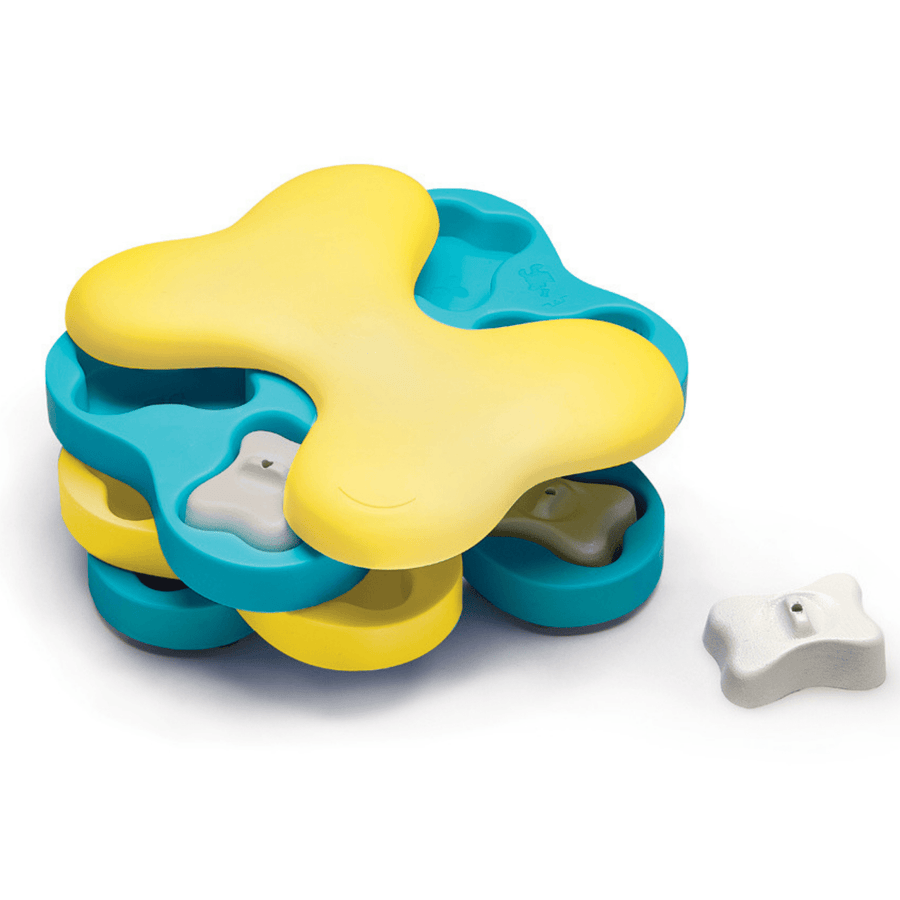
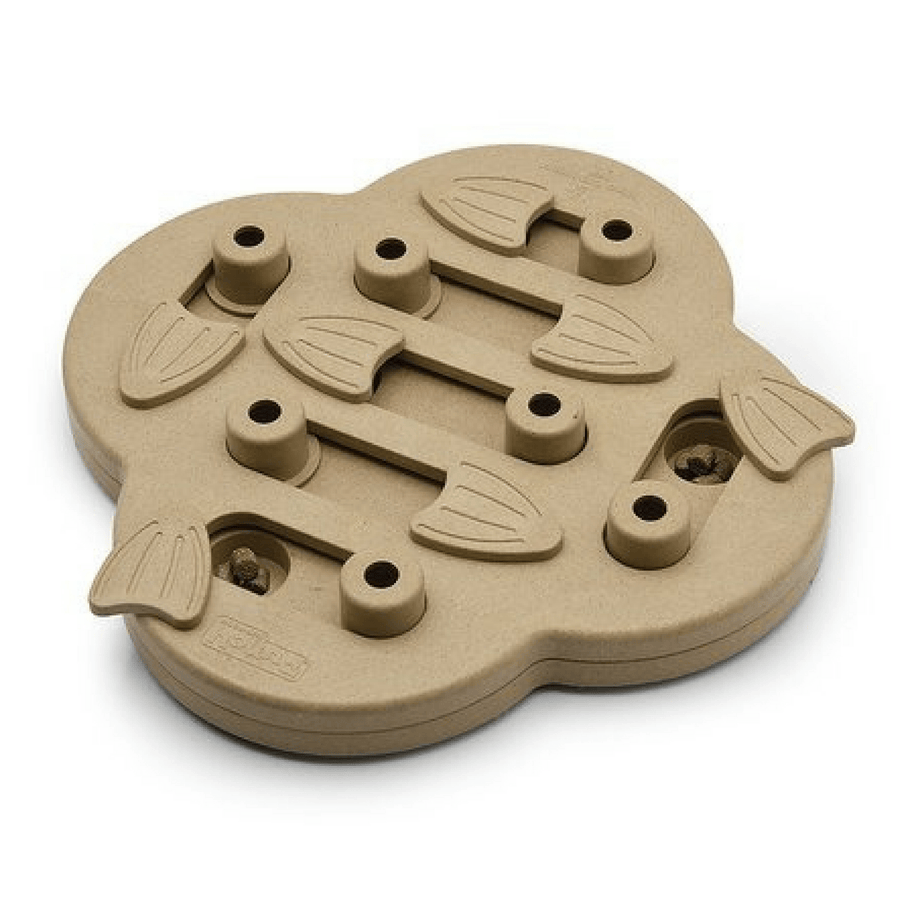
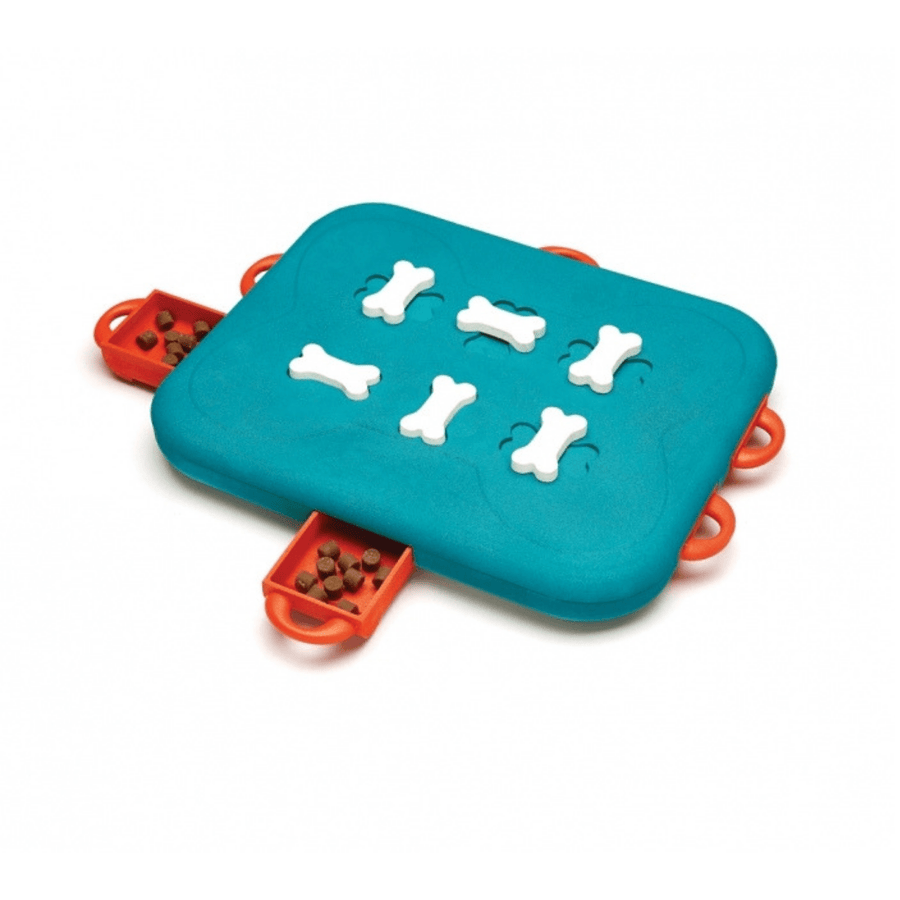
Puzzle dog toys challenge your dog to manipulate, slide, lift, or rotate components to access a hidden treat reward. They range from simple designs suited to a dog's first puzzle experience through to multi-step challenges that take persistence and problem-solving to fully solve.
Start with an easier puzzle and increase difficulty as your dog builds confidence. Introducing too difficult a puzzle too early is the most common reason dogs lose interest in puzzle toys generally, since repeated failure to access the reward is discouraging rather than stimulating.
Treat dispensing dog toys release small rewards as your dog interacts with them by rolling, nudging, or chewing the toy to dispense treats gradually rather than all at once. This extends engagement significantly longer than a toy that's quickly abandoned once any novelty wears off, and gives dogs a constructive, independent activity during periods when you can't provide active attention, such as while working from home or during a busy morning routine.
Look for adjustable dispensing difficulty on treat dispensing dog toys where available. This lets you start easy and increase the challenge as your dog masters the basic mechanism, keeping the toy engaging for longer rather than becoming predictable and ignored.
A dog food puzzle toy turns an entire meal into an enrichment activity rather than a few seconds at a bowl. This is particularly valuable for:
Dog food puzzle toys are available in styles ranging from simple slow-feed mats and bowls through to more complex rolling or stacking puzzles that require active manipulation to release kibble.
A dog new to puzzle toys needs to experience an early, easy success to understand the format and stay motivated. Start with a single-step puzzle (lift a flap, slide a panel) before progressing to multi-step designs that combine several actions in sequence.
Choose a puzzle or treat dispensing toy sized appropriately for your dog's mouth and jaw strength. A toy too small for a large dog can become a choking hazard if it's swallowed whole or chewed into pieces, while a toy too large or heavy may be impractical for a small breed to manipulate effectively. Always supervise the first few sessions with any new interactive toy to confirm your specific dog can use it safely.
The best dog puzzle toys are made from food-safe, non-toxic materials that withstand repeated chewing, scratching, and nudging without cracking or splintering. Cheaper puzzle toys often use thinner plastic that degrades quickly under determined use. For dogs that are hard on toys generally, paying more for a genuinely durable design reduces both replacement cost and the risk of ingesting broken plastic fragments.
Some dogs take to puzzle and treat dispensing toys immediately; others need a gentler introduction:
1. Start with the toy empty or with an obvious reward visible so your dog understands a treat is involved before attempting the puzzle mechanism.
2. Demonstrate if needed: Gently showing your dog how a flap lifts or a panel slides can speed up understanding, particularly for the first puzzle toy your dog has used.
3. Use a highly motivating treat for the first few sessions: Your dog's favourite reward makes the effort worthwhile while they're still learning the mechanism.
4. Don't intervene too quickly if your dog struggles: A brief struggle is part of the mental engagement; intervene only if your dog appears genuinely frustrated or about to give up entirely.
5. Increase difficulty gradually once your dog reliably solves the current level, to keep the toy mentally engaging rather than predictable.
Note:Guidance on enrichment and behaviour is provided for general information. If your dog shows signs of persistent anxiety, frustration, or compulsive behaviour, consult your veterinarian or a qualified animal behaviourist.
Interactive dog toys are toys that require active engagement (problem-solving, manipulation, or sustained interaction), rather than passive chewing or batting around. They provide mental stimulation that physical exercise alone doesn't fully deliver, and are increasingly recommended by veterinary behaviourists as part of managing boredom-driven behaviours like destructive chewing, excessive barking, or attention-seeking. A dog with regular access to genuine mental challenge is generally calmer and more settled than one relying on physical exercise alone.
Dog puzzle toys typically involve a fixed mechanism (lifting flaps, sliding panels, rotating discs) to reveal a hidden reward, and are often used for short, focused sessions. Treat dispensing dog toys release rewards gradually as the dog interacts with them (rolling, nudging, chewing), and are better suited to longer, more independent engagement. Many dog owners use both types, with puzzles for active engagement sessions and dispensing toys for longer independent play.
Yes. A dog food puzzle toy turns an entire meal into a slower, more deliberate activity by requiring manipulation to access kibble, rather than allowing it to be gulped directly from a bowl. This reduces choking and regurgitation risk, and may help lower bloat (gastric dilatation-volvulus) risk in deep-chested breeds prone to the condition, where rapid eating is a recognised contributing factor. Food puzzle toys also extend mealtime duration, which can support better portion satisfaction for dogs on a calorie-controlled diet.
Yes, though the right type varies. High-energy and working breeds without a structured "job" often benefit most from challenging dog puzzle toys, since unmet mental stimulation needs in these breeds frequently manifest as destructive or anxious behaviours. Senior dogs and those recovering from injury benefit from gentler, lower-effort enrichment like simple food puzzles that provide stimulation without requiring high energy expenditure. Puppies benefit from simple puzzles introduced early to build problem-solving confidence, alongside appropriate chew toys for teething.
For dogs that chew aggressively, look for puzzle toys specifically rated for durability or "tough chewer" use. These are typically made from thicker, reinforced plastic or rubber rather than standard puzzle materials. Avoid toys with small, detachable parts that could break off and be swallowed. Always supervise the first several sessions with a new toy to confirm your specific dog can't destroy or ingest pieces of it, even if the toy is marketed as durable.
Start with an easy puzzle and a highly motivating treat, demonstrating the mechanism if your dog seems confused rather than leaving them to figure it out entirely alone for the first attempt. Allow a brief struggle, as working through some difficulty is part of the mental engagement, but step in if your dog becomes genuinely frustrated rather than persistently curious. Increase difficulty gradually once your dog consistently solves the current level.
Modern Pets stocks a full range of dog puzzle toys Australia-wide, including treat dispensing designs, food puzzle toys, and durable options for strong chewers, with free metro shipping on orders over $99. Browse our interactive dog toys range online, or contact our team on 1300 268 060 or at customercare@modernpet.com.au for guidance on the right toy for your dog's size, age, and play style.
© Modern Pets All Rights Reserved | Terms of Use | Privacy Policy