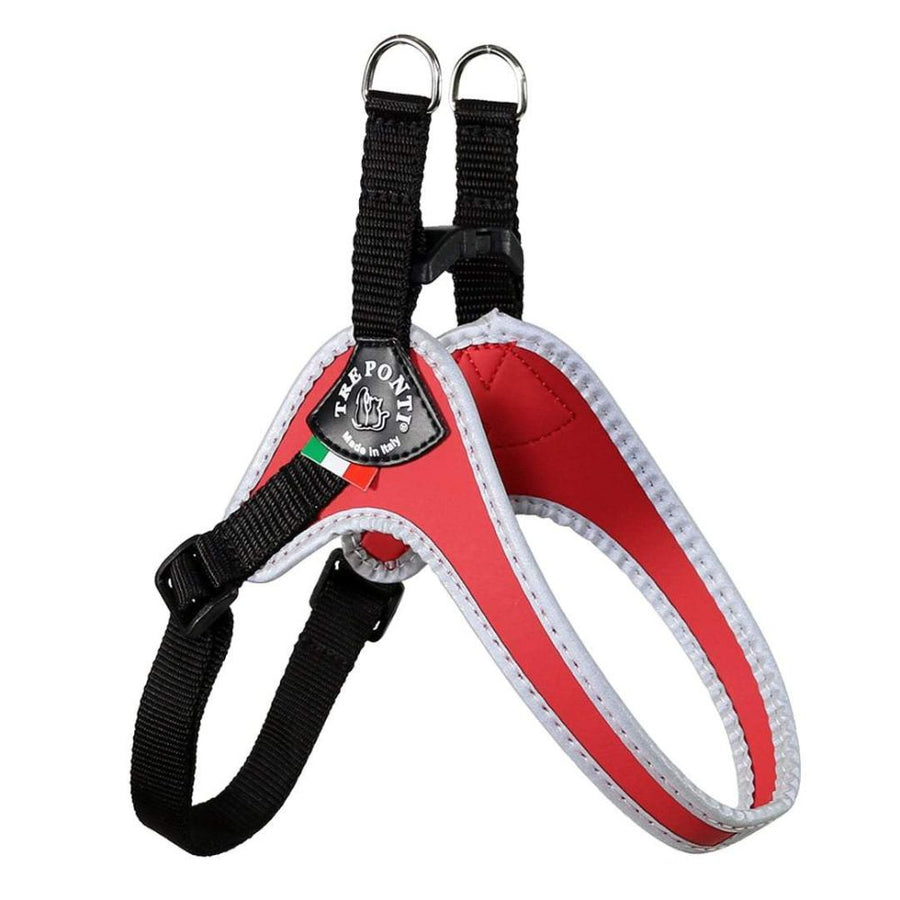
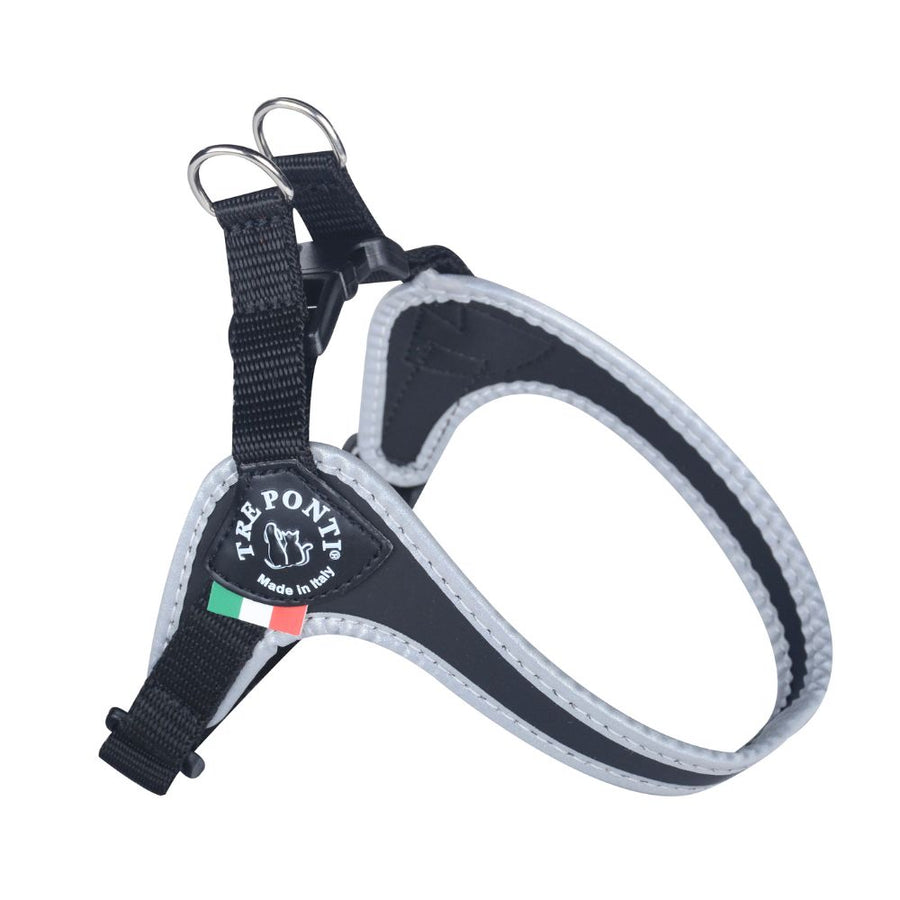
Modern Pets stocks a range of dog harnesses Australia-wide, including no pull dog harness designs, front clip dog harness options, tactical dog harness builds, and escape proof dog harness designs for determined wrigglers, with free metro shipping on orders over $99.
Why a Harness Is Often Better Than a Collar for Walking
A collar concentrates leash pressure directly on the throat and neck. For most dogs, occasional gentle leash tension is fine, but for dogs that pull consistently, or breeds with structural vulnerabilities, collar-only walking carries real welfare risks.
Brachycephalic breeds (flat-faced dogs including pugs, French bulldogs, English bulldogs, shih tzus, and Cavalier King Charles spaniels) are at particular risk from collar pressure. These breeds already have compressed airways and are prone to breathing difficulties. Even moderate leash tension on the trachea can cause coughing, choking, or trigger a breathing episode. Vets consistently recommend harnesses over collars for brachycephalic breeds, regardless of whether the dog pulls.
Dogs that pull are also better served by a harness, and specifically a no pull dog harness or front clip dog harness: a collar allows a dog to use its full body weight to pull forward into the tension (which many dogs actually find reinforcing), while a harness with a front attachment point redirects the dog back toward the handler whenever tension builds, naturally interrupting the pull pattern without requiring force.
Dogs recovering from neck or spinal injury benefit from harness use on veterinary recommendation, avoiding any pressure on an already compromised area.
For most dogs, a quality adjustable dog harness is simply a more comfortable and safer everyday option than walking on a collar alone, even if no specific health concern applies.
Types of Dog Harnesses
No Pull Dog Harness
A no pull dog harness is specifically designed to reduce pulling on the lead without requiring physical corrections. Most use a front chest attachment point that redirects the dog toward the handler when tension builds. The dog's forward momentum turns into a leftward or rightward rotation rather than a straight-line pull, which is significantly less reinforcing than pulling forward and naturally discourages the behaviour over time.
For the best no pull dog harness in Australia, look for: a robust front D-ring rated for your dog's weight, a padded chest plate that doesn't restrict the front leg range of motion, and dual-attachment capability (front and back clip) so you can switch between anti-pull mode and a relaxed back-clip setup depending on the walk.
Front Clip Dog Harness
A front clip dog harness attaches the lead at the centre of the chest rather than at the back. This is the mechanism behind most no-pull designs and is the recommended attachment point for dogs actively in leash training, reactive dogs, or any dog whose pulling is a genuine control challenge. A front clip redirects without punishing, and changes the direction of travel rather than causing discomfort.
Back Clip Dog Harness
A back clip harness attaches the lead at a ring between the shoulder blades. This is the most comfortable and natural everyday setup for dogs that already walk calmly and don't pull as it allows free forward movement without restriction.
Back clip harnesses suit calm adult dogs, short dogs whose lead angle is better served by a back attachment, and any situation where the dog is already reliable on the lead.
Step In Dog Harness
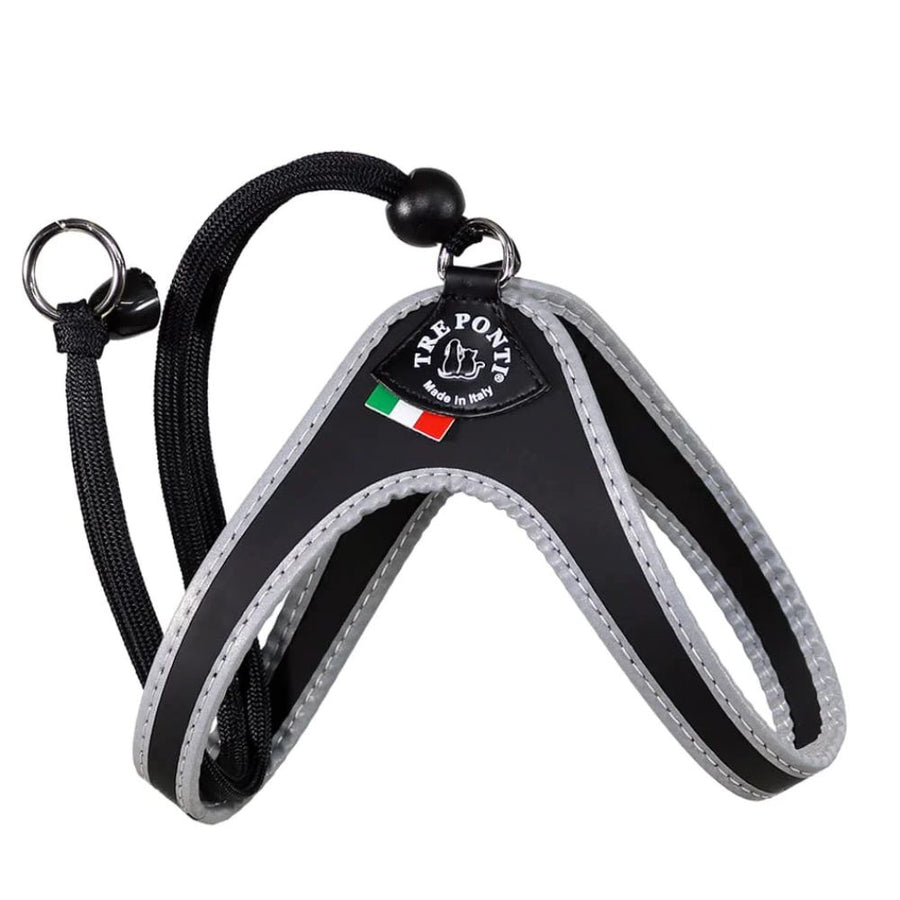
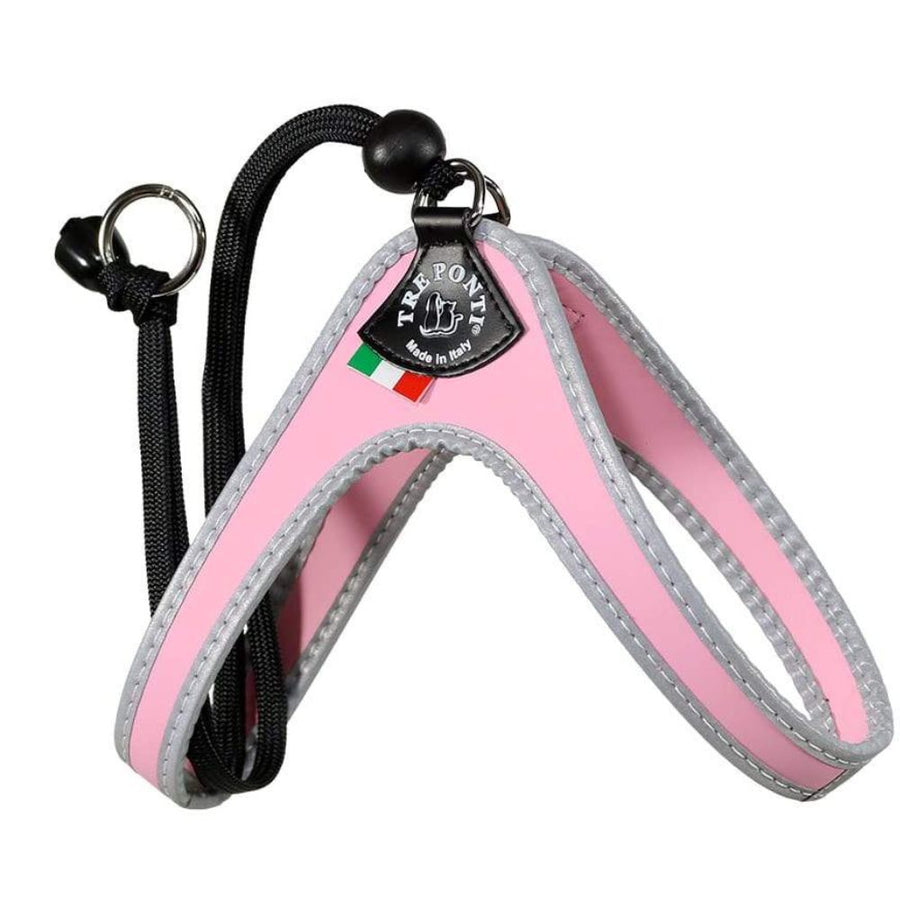
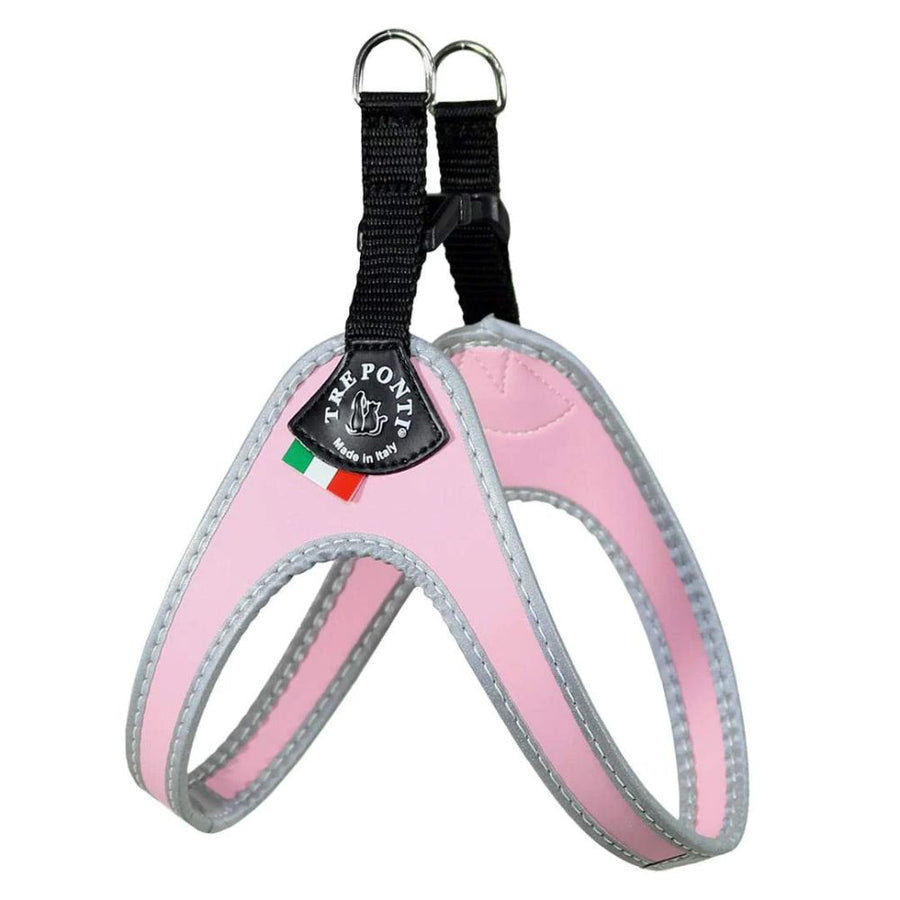
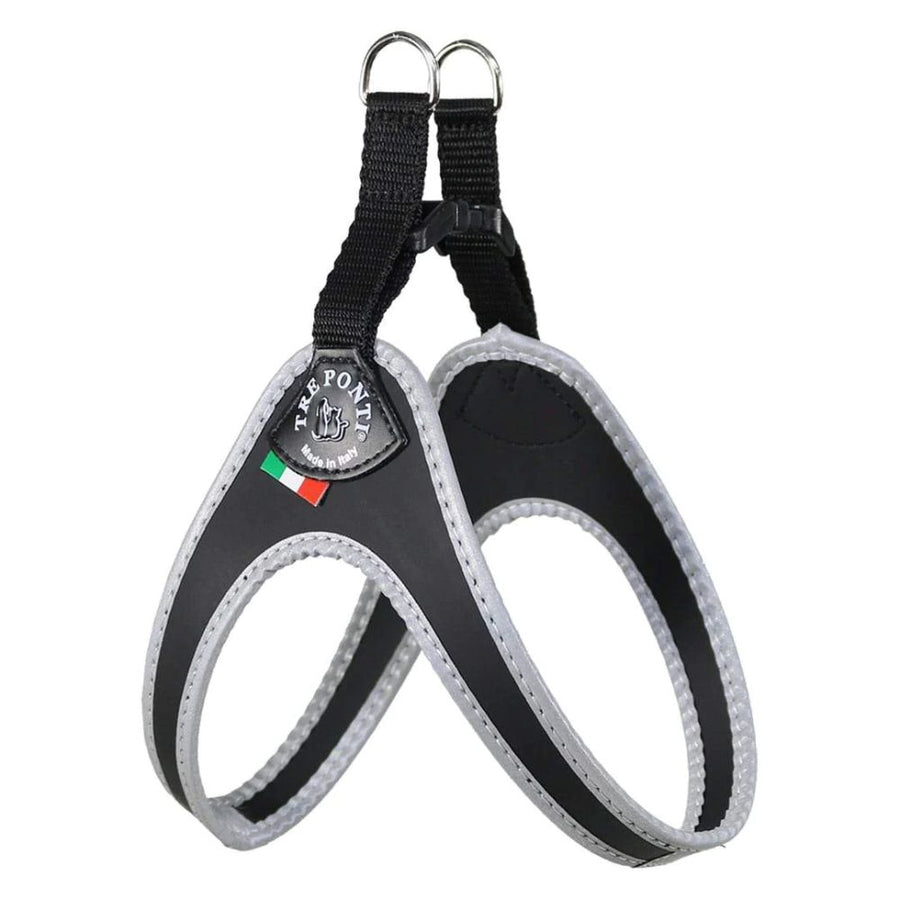
A step in dog harness allows your dog to simply step each front paw into two loops, which are then brought up and fastened at the back, with no overhead manoeuvring required. This is particularly useful for:
- Dogs that dislike anything passing over their head or face
- Puppies still getting used to harness fitting
- Wriggly or anxious dogs that make overhead fitting difficult
- Senior dogs with reduced flexibility in the neck
Step in designs are typically simpler and lighter than full over-the-body harness builds, and suit dogs that have already mastered lead walking rather than those actively in training.
Escape Proof Dog Harness
An escape proof harness is specifically designed for dogs that can back out of or slip free from a standard harness; a behaviour more common than most owners expect, and a genuine safety risk in traffic or unfamiliar environments.
Escape-proof designs use additional straps, tighter chest-to-back ratios, or a more complex fitting system that leaves no room to wriggle backwards through the harness. These suit:
- Sighthounds and slim-bodied breeds (Greyhounds, Whippets, Salukis) whose chest-to-neck ratio makes standard harnesses easy to slip
- Anxious or reactive dogs that may attempt to flee when startled
- Any dog with a history of backing out of previous harnesses
Tactical Dog Harness
A tactical dog harness draws on working dog design, with heavier-duty webbing, multiple attachment points, MOLLE-compatible panels for clip-on pouches, and a built-in top handle for physical control in close-range situations.
Tactical designs suit owners who need a maximum-control, maximum-durability harness for working environments, active outdoor adventures, or large or strong dogs where a standard harness is insufficiently robust.
Dog Car Harness
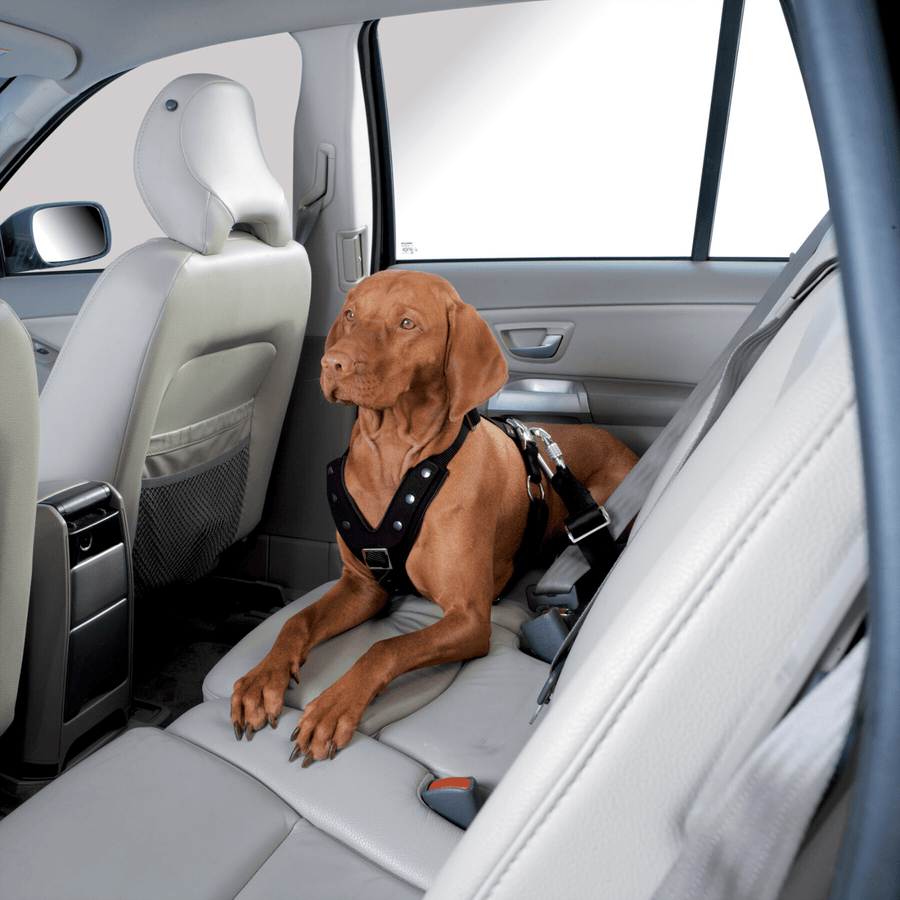
A dog car harness is specifically designed to connect to a vehicle seatbelt anchor, securing your dog safely in the back seat during travel. This is distinct from a standard walking harness used with a seatbelt adapter. A dedicated dog car harness is crash-tested or at minimum structurally designed for the forces involved in a sudden stop, whereas a standard walking harness used with a basic seatbelt clip is not.
This matters both for safety and compliance: every Australian state and territory requires dogs to be restrained in a moving vehicle, and a dedicated dog car harness is among the most compliant options for dogs that ride in the back seat rather than in a carrier.
Choosing the Best Dog Harness in Australia
Small dog harness considerations
A small dog harness needs to be sized accurately for a small body. Standard harnesses adjusted to their smallest setting often still don't fit toy breeds or small dogs correctly, sitting too wide across the chest or riding up toward the throat. Look specifically for harnesses designed for small dogs with chest girth ranges starting below 30cm, lightweight construction, and a chest plate narrow enough to sit correctly without restricting front leg movement.
Popular small dog harness styles include step in designs (easy fitting for smaller, more wriggly dogs) and adjustable dog harness builds with multiple sizing points rather than a single adjustment.
Large dog harness considerations
A large dog harness needs to handle greater force, as a large, strong dog pulling hard applies significantly more pressure to every fitting point than a small dog. For large breeds, prioritise stitching quality, metal hardware (not plastic) at key connection points, and a chest plate wide enough to distribute force across the full width of the chest without creating a pressure point at the centre.
For the best dog harness Australia large-breed owners can find, look for rated hardware, reinforced stitching at the D-ring attachment points, and an adjustable harness with at least three separate adjustment points to get the fit right across the neck, chest, and girth.
How to measure for a dog harness
Accurate measurement prevents the most common harness problems, like slipping, chafing, or restricted movement:
1. Chest girth: Measure around the widest point of your dog's chest, just behind the front legs. This is the most important measurement for harness sizing.
2. Neck girth: Measure around the base of the neck where a collar would sit, for harnesses with a neck loop.
3. Back length: Measure from the base of the neck to the base of the tail for full-body harness designs.
Add 2–3cm to your chest measurement for a comfortable fit, then check against the harness's sizing chart. As a fit check once fitted: you should be able to slide two fingers comfortably under any strap without forcing, and the harness should not pull forward toward the throat when you apply gentle rearward pressure.
Harness vs. Collar: When to Use Each
Most dog owners benefit from using both a collar for everyday ID tag wear and a harness for active walking and outings. The two serve different functions:
- Collar: ID tags, passive identification, light everyday wear, short trips. Not recommended as the primary lead attachment for dogs that pull, brachycephalic breeds, or dogs with neck/tracheal concerns.
- Harness: Active walking and exercise, training sessions, travel in vehicles, any situation requiring control or where neck pressure is a concern.
Note:Guidance on harness selection for specific health conditions, including brachycephalic breeds or dogs with diagnosed tracheal or spinal conditions, is provided for general information. Always consult your veterinarian for breed or condition-specific recommendations.