Why Every Dog Needs Their Own Space
A dedicated kennel for dogs provides more than shelter; it gives them a retreat where they feel safe, calm, and in control of their environment. This is particularly important for dogs that spend significant time outdoors, which is common in Australia given the climate and lifestyle.
Veterinary and animal behaviour research consistently identifies access to a personal shelter space as a contributor to reduced anxiety in dogs, particularly in multi-pet households or homes with young children. A well-chosen dog house allows your dog to self-regulate, retreating when they need rest or quiet, and returning to the household when they're ready.
Beyond welfare, a quality kennel protects your dog from the specific challenges of the Australian environment: intense UV exposure, summer heat, heavy rain, and cold overnight temperatures in southern states. Not all kennels are built to handle these conditions equally, which makes material and design choices particularly important for Australian buyers.
How to Choose the Right Dog Kennel for Your Dog
What size kennel does my dog need?
Sizing is the most important factor when buying a dog kennel. A kennel that is too small will be avoided; one that is too large loses its den-like quality and provides less effective insulation in cold weather.
As a general rule, your dog's kennel should be approximately 25% taller and 25% longer than your dog's measurements from nose to base of tail. This gives your dog enough room to stand, turn around, and lie down comfortably without the space being so large that it feels exposed.
Practical size guidance:
- Puppies and small breeds (under 10kg): A puppy kennel or small dog house with a compact footprint and lower entry point. Keep in mind that puppies grow, so if you have a large-breed puppy, size for the adult dog, not the puppy.
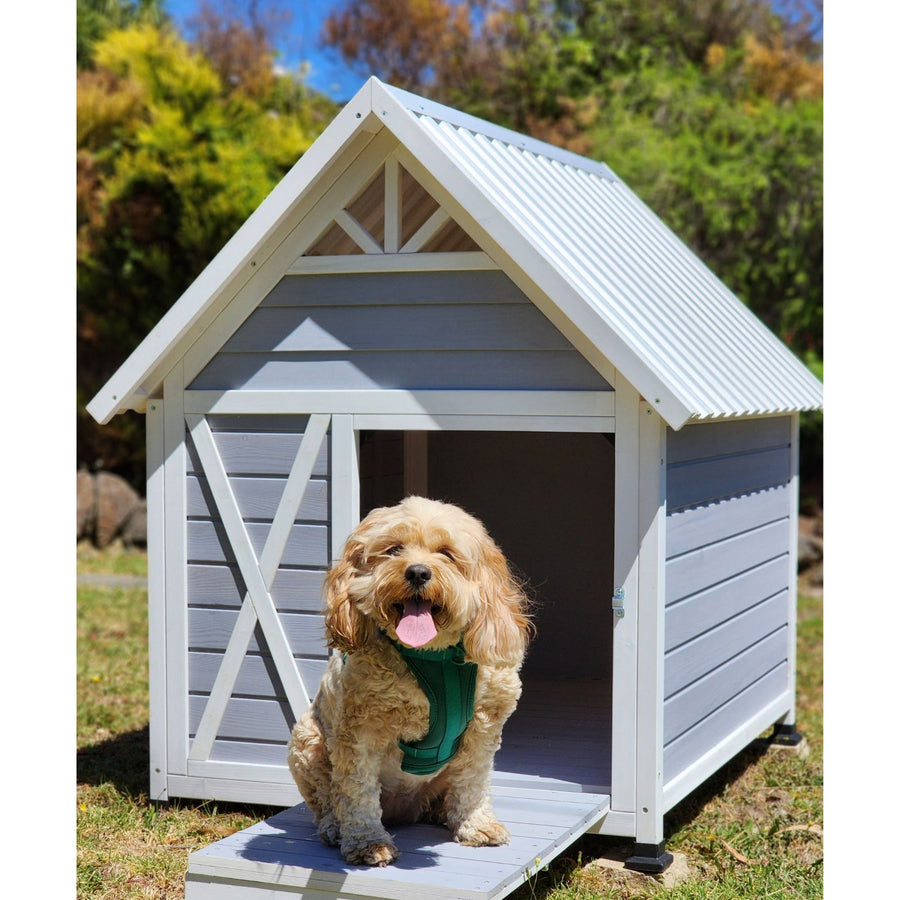
- Medium breeds (10–25kg): A standard kennel for dog breeds such as beagles, border collies, and staffy-types. Look for an internal floor space of at least 70 x 90cm.
- Large breeds (25kg+): A large dog kennel or large dog house with reinforced construction and a floor space of at least 90 x 120cm. For very large breeds like malamutes or Great Danes, look at our extra-large dog kennels range.
Always measure your dog before purchasing and compare against the internal dimensions listed on each product page (external measurements can be misleading).
What material is best for a dog kennel in Australia?
Material choice significantly affects durability, insulation, and maintenance, particularly in Australia's varied and often extreme climate.
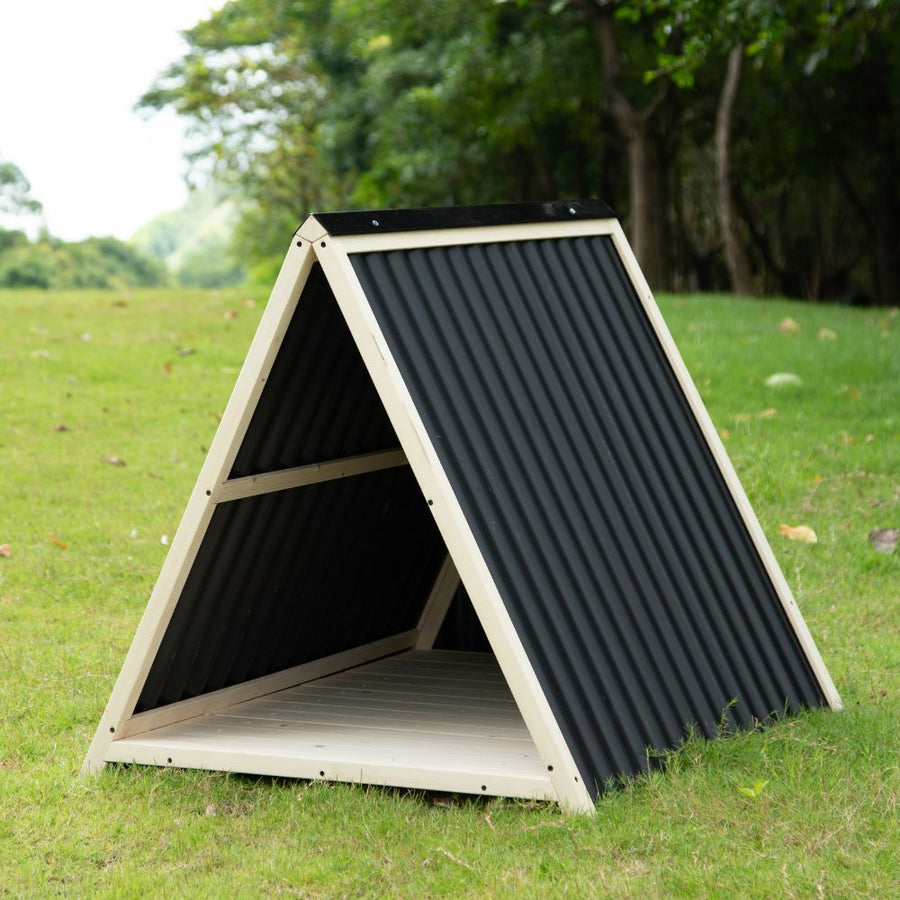
Wooden dog house options offer natural insulation, keeping the interior cooler in summer and warmer in winter than plastic equivalents. The trade-off is maintenance: untreated wood can warp, crack, or rot in high-humidity environments or areas with heavy rainfall. Look for kennels made from treated, weather-resistant timber, and reseal as needed.
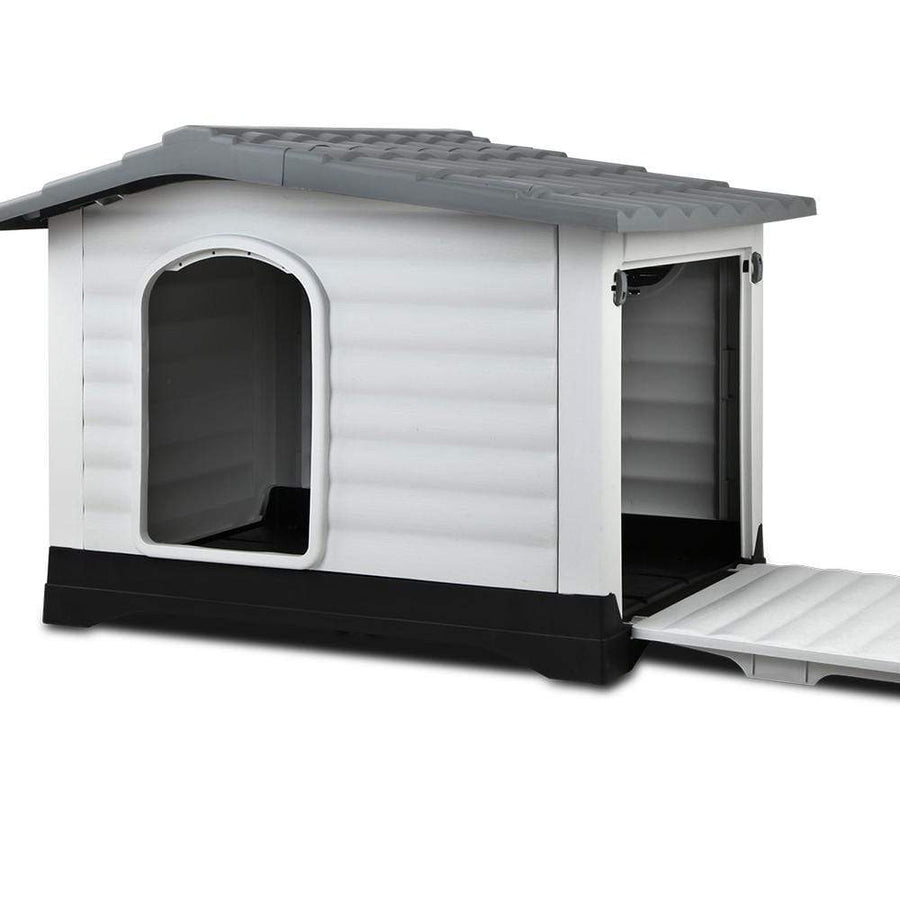
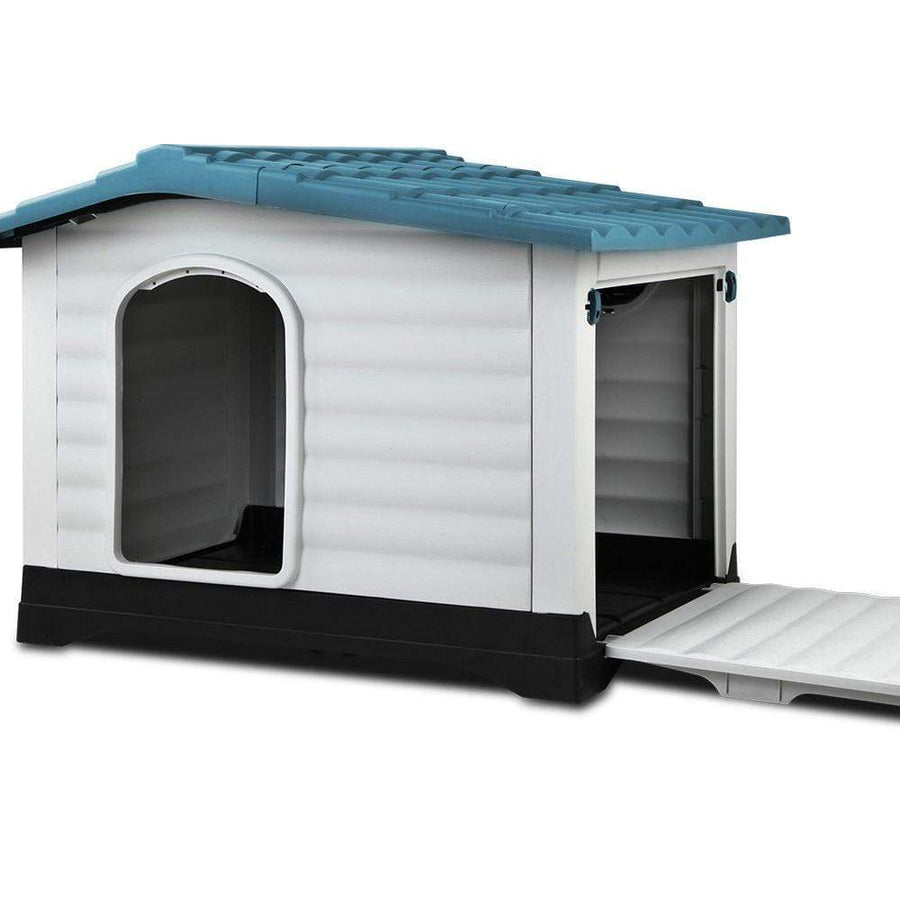
Plastic dog kennels are low-maintenance, easy to clean, and resistant to moisture and insects. They are a practical choice for wet climates or owners who want a kennel that requires minimal upkeep. Plastic can absorb and retain heat in direct sun, so positioning in a shaded area is important during Australian summers.
Modern composite and resin dog houses combine the aesthetic of timber with the durability and weather resistance of plastic. These are increasingly popular in Australia for their balance of style and low maintenance.
Traditional vs. modern dog house: which should I choose?
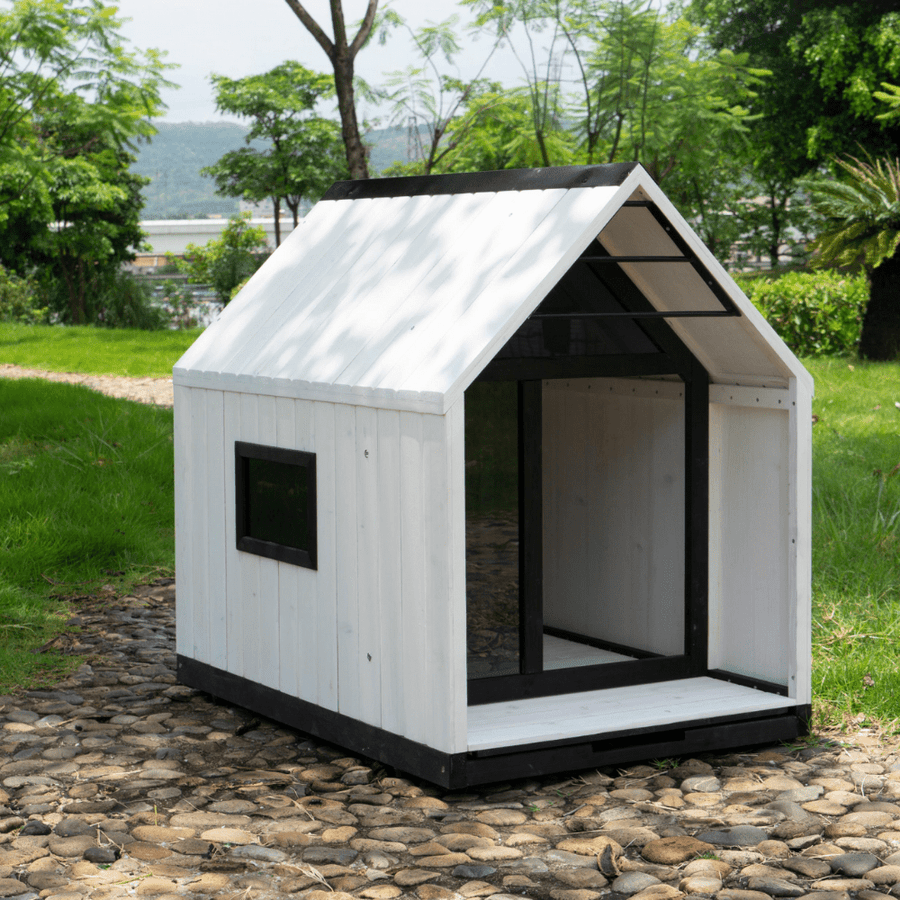
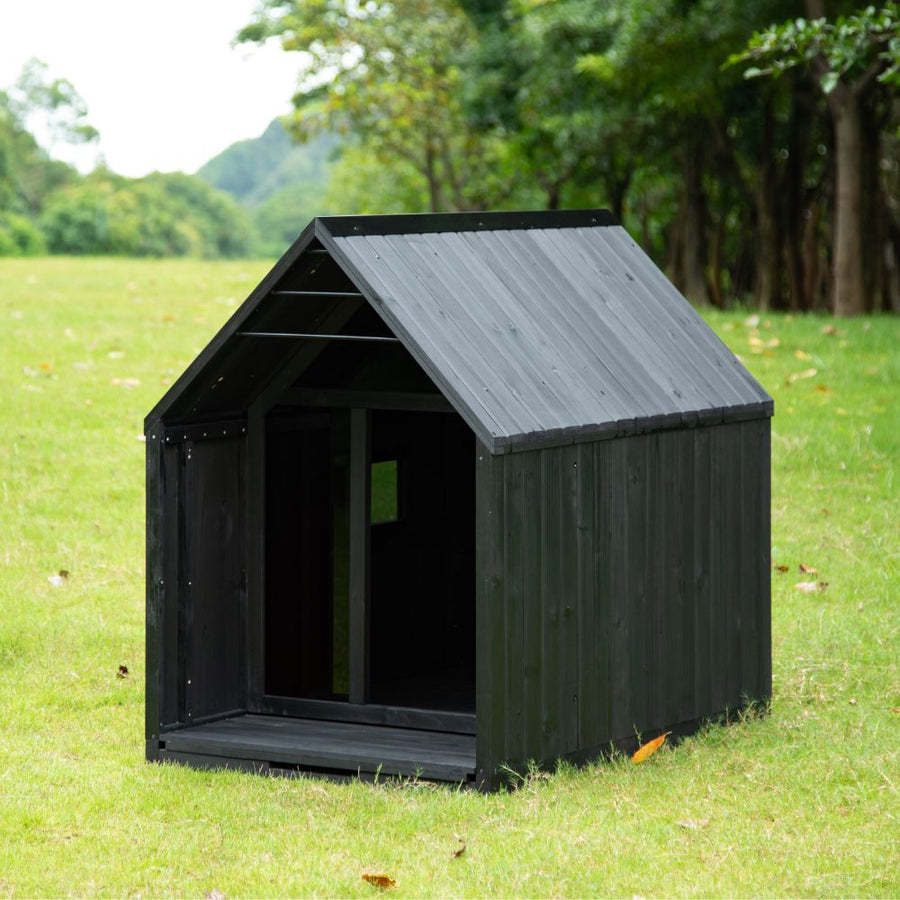
Traditional kennel for dogs designs feature a pitched roof, simple rectangular layout, and timber or plastic construction. They are functional, widely available, and suit most outdoor settings.
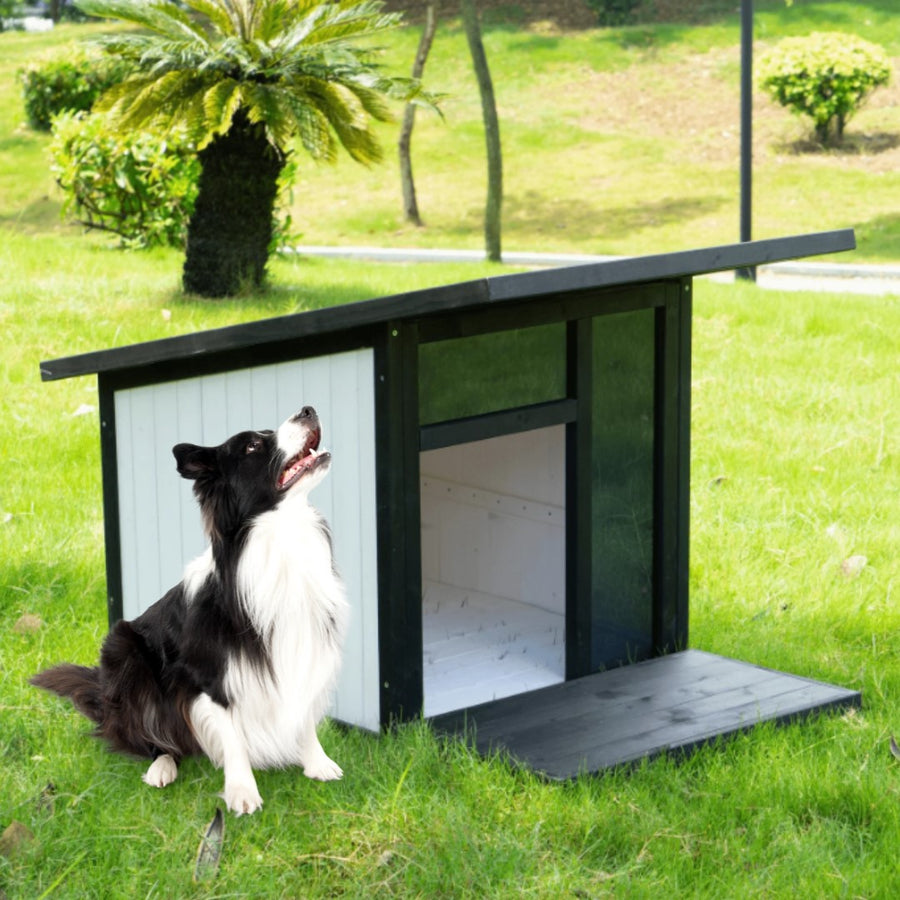
Modern dog house designs incorporate features such as flat or angled contemporary rooflines, integrated ventilation, elevated bases, and colour palettes suited to modern home exteriors and interiors.
The right choice depends on your priorities. If durability and cost are primary considerations, a traditional design will serve most dogs well. If the kennel will be visible from inside your home or in a landscaped garden, a modern dog house is worth considering.
Settig Up Your Dog Kennel for Comfort and Safety
Buying the right kennel is only the first step. Placement and setup have a significant impact on whether your dog will actually use it.
Placement tips for an outdoor dog kennel:
- Position the kennel in a shaded area:particularly important in Australian summers, where direct sun can make the interior dangerously hot.
- Face the entry away from the prevailing wind direction to reduce draughts in winter.
- Elevate the base off bare earth or concrete where possible, to reduce moisture and improve insulation.
- Place the kennel in a location where the dog can see household activity. Dogs feel more settled when they can observe their environment.
- Avoid placing the kennel directly against a fence or wall in areas with known snake activity, as these are common shelter spots.
Our Dog Kennel Range
Modern Pets stocks dog kennels and dog houses from trusted brands including Modern Pets and DSZ. Our range covers:
- Small dog house designs: Compact kennels for small breeds and puppies
- Medium kennels: Standard sizing for the most common dog breeds
- Large dog kennels and large dog house options: Heavy-duty construction for large and extra-large breeds
- Modern dog house designs: Contemporary styling for indoor or sheltered outdoor use
- Wooden dog house models: Natural timber construction with weather-resistant treatment
- Outdoor dog kennel builds: Fully weatherproofed for year-round outdoor exposure
All products include assembly instructions, and most can be assembled without tools in under 30 minutes. Product pages include internal and external dimensions, material specifications, and customer reviews.
Note: Guidance on kennel sizing, materials, and placement is provided for general information. For dogs with specific health conditions, mobility issues, or behavioural concerns, consult your veterinarian or a qualified animal behaviourist.