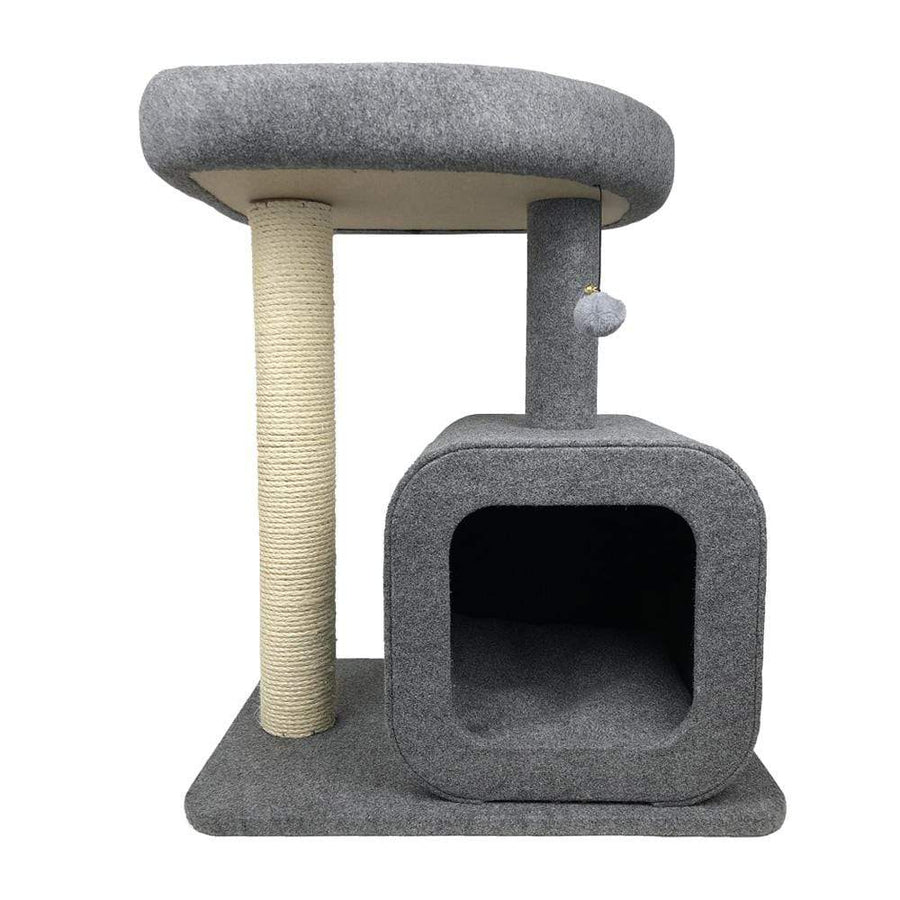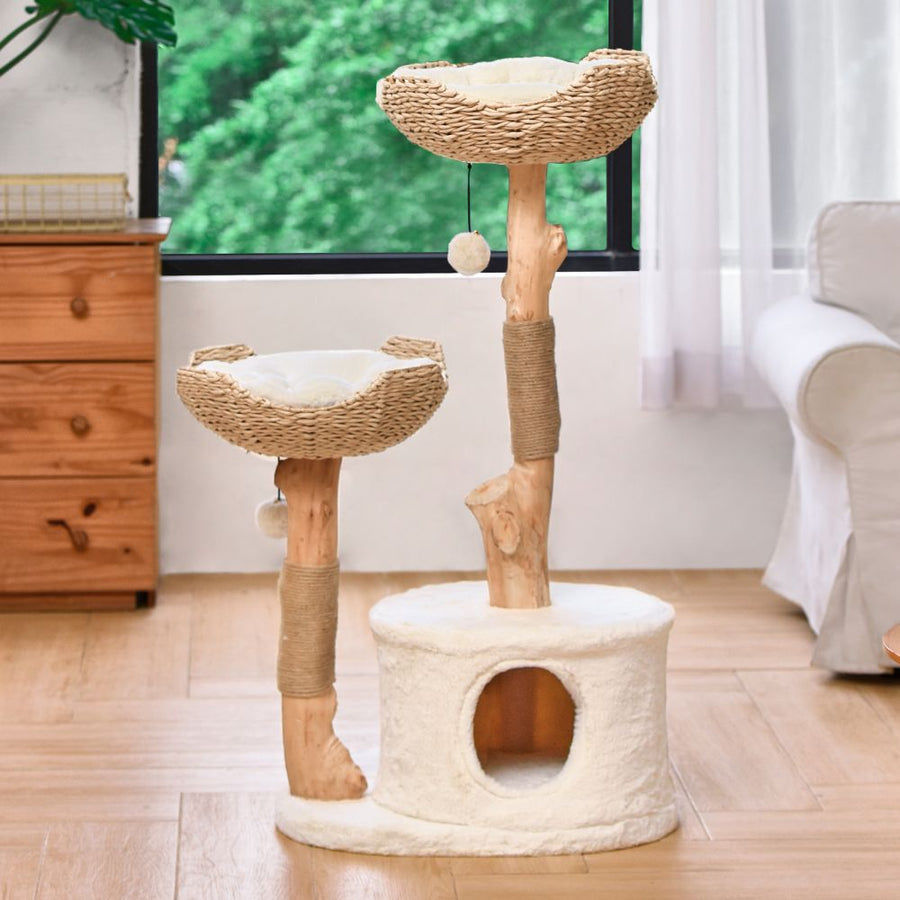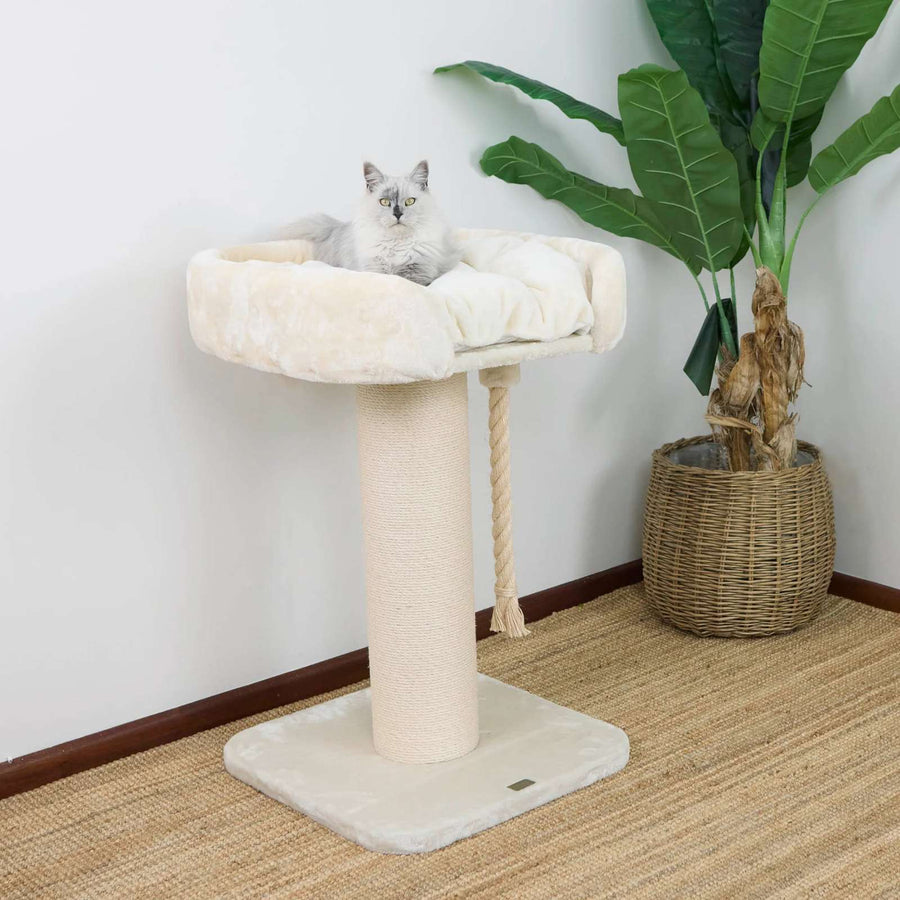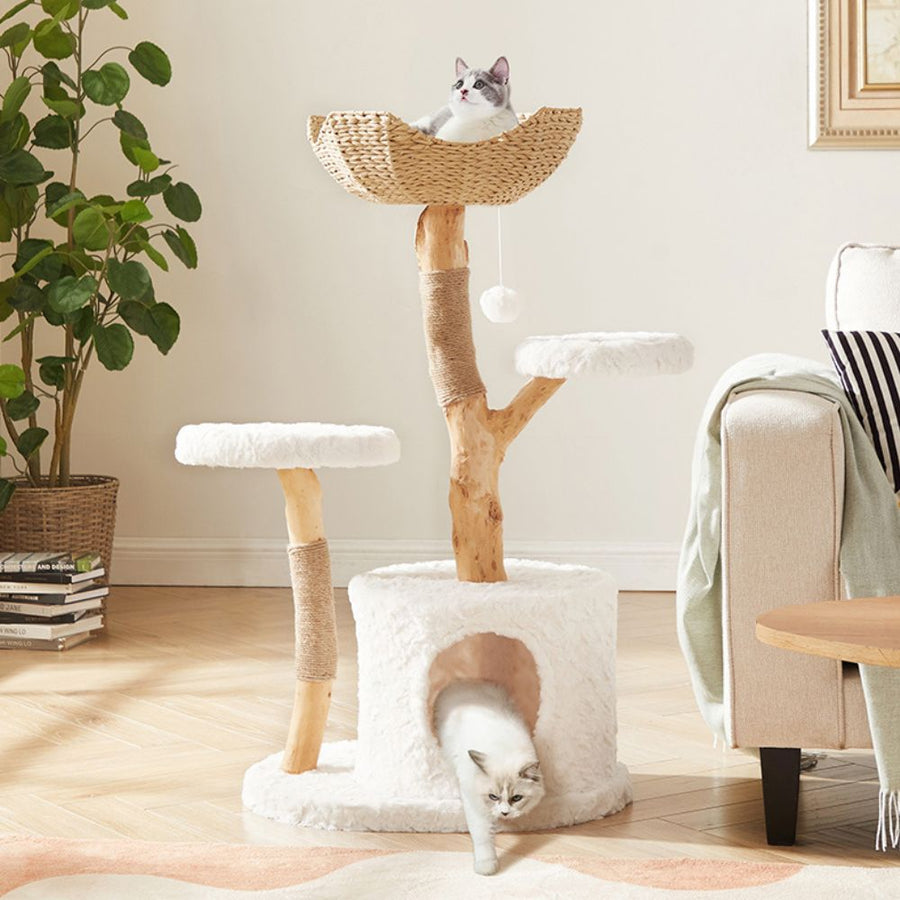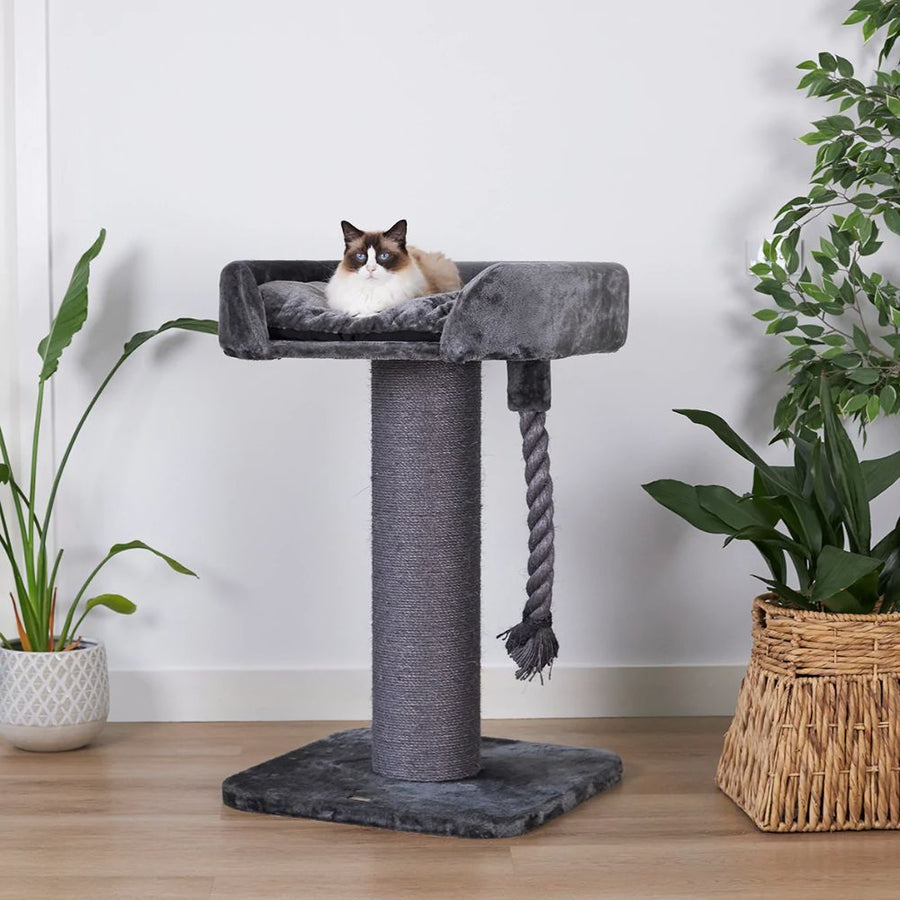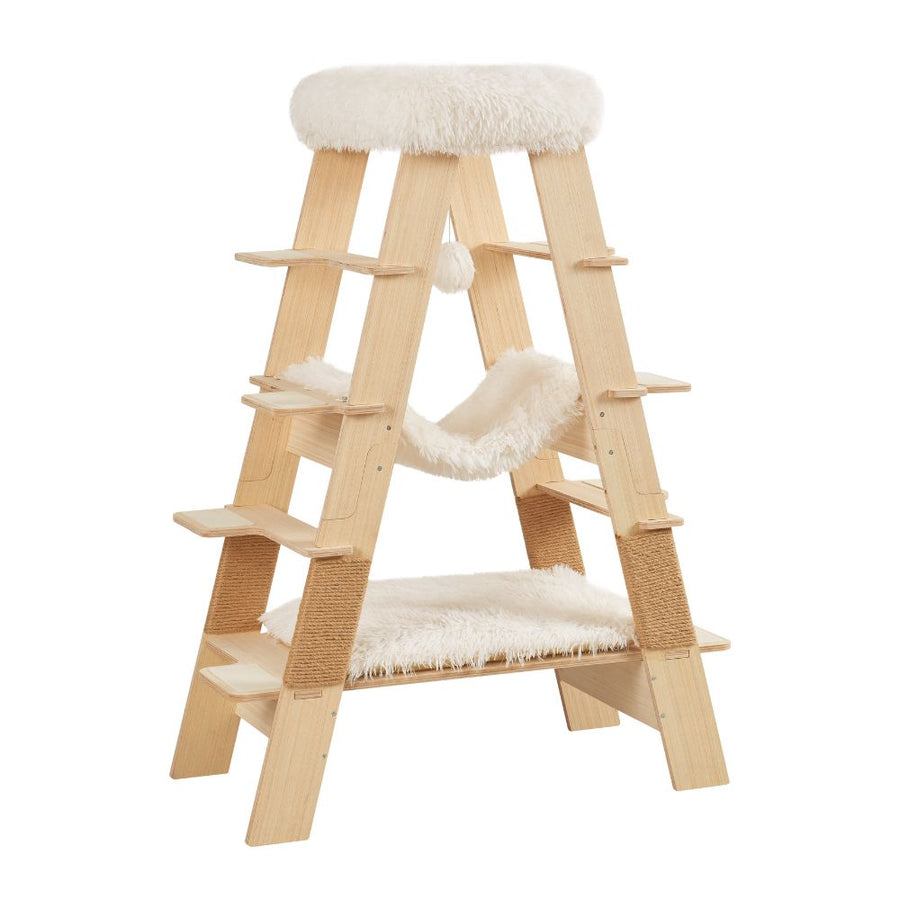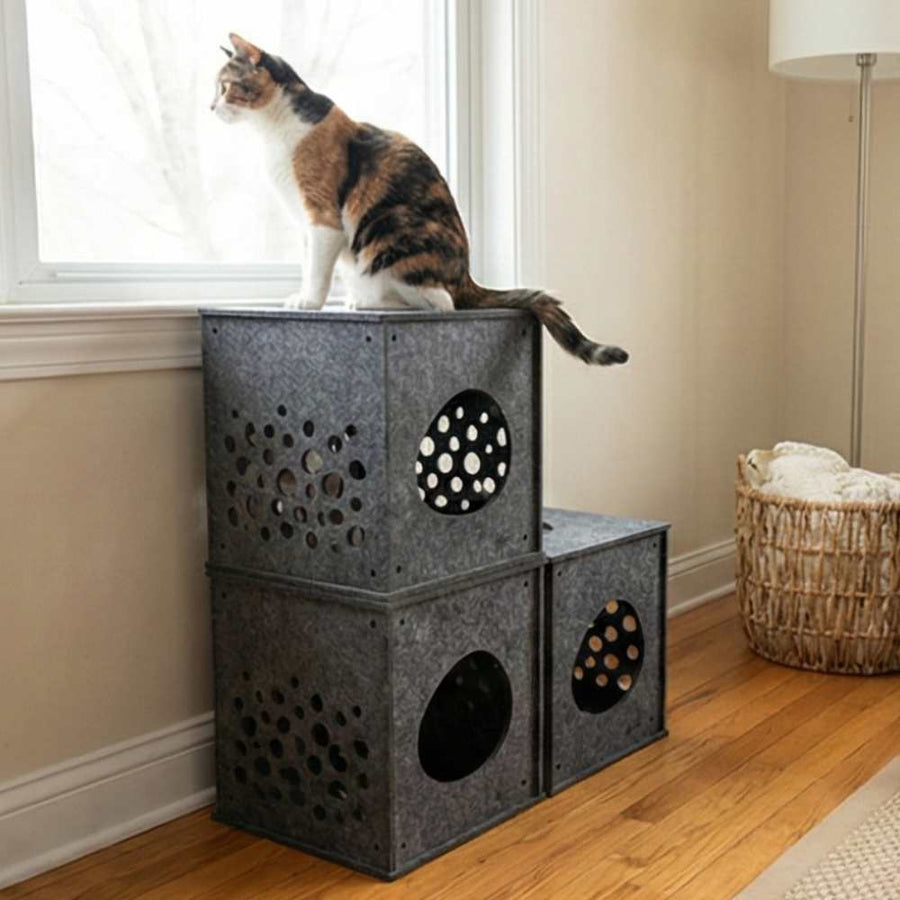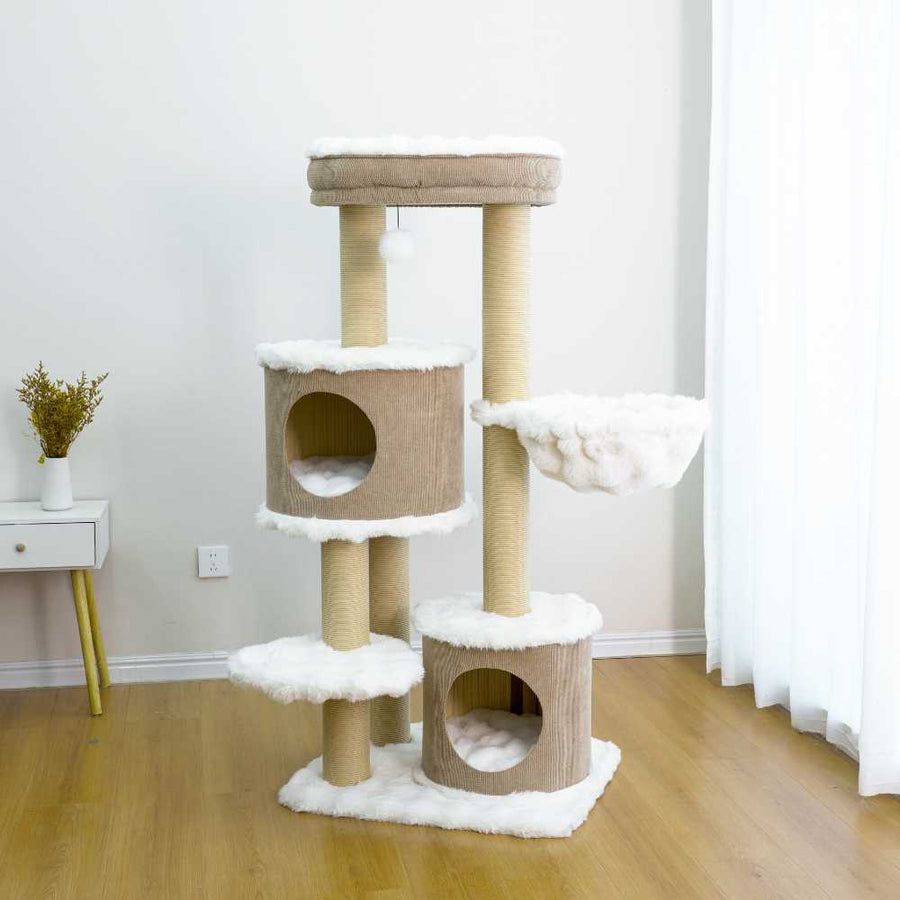




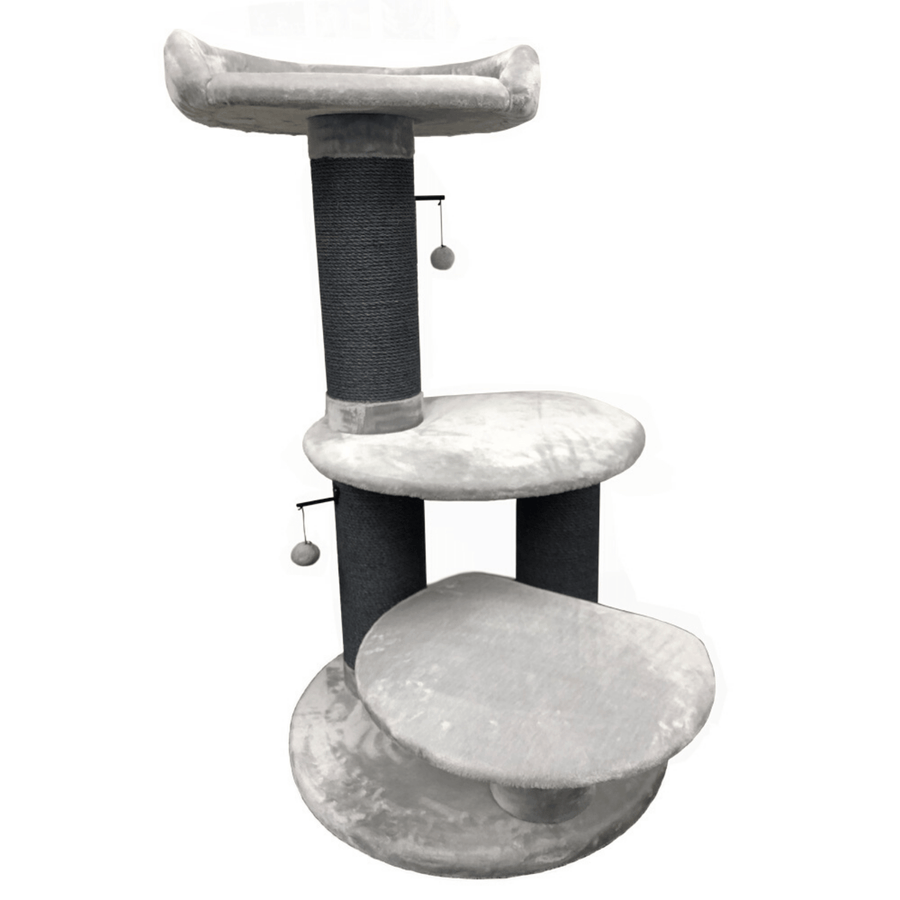
A cat tree gives your cat height, territory, and a dedicated space to climb, scratch, rest, and survey their environment. For indoor cats especially, a well-chosen cat tree or cat tower is one of the most welfare-positive investments an owner can make: providing the vertical space that veterinary behaviourists identify as essential for reducing stress, discouraging unwanted scratching, and supporting healthy daily activity.
Modern Pets stocks a range of cat trees Australia-wide, from compact small cat trees for apartments to tall cat trees, floor to ceiling cat tree designs, and large cat trees for bigger breeds, with free metro shipping on orders over $99.
In the wild, cats are both predator and prey. Height provides safety; a cat at elevation can observe approaching threats and feel secure in a way that floor-level resting cannot replicate. This instinct does not disappear in domestic cats. Research in feline environmental enrichment consistently shows that cats with access to elevated spaces display lower stress indicators, fewer conflict behaviours in multi-cat households, and higher levels of calm, exploratory activity throughout the day.
The RSPCA and International Cat Care both identify vertical space as a core component of indoor cat welfare, just as important as food, water, litter access, and play. In multi-cat households, elevated spaces are particularly critical: they increase the effective territory available to each cat without increasing floor space, reducing the resource competition that drives inter-cat tension and aggression.
A cat tree or cat tower also addresses one of the most common household complaints from cat owners: furniture scratching. Scratching is not destructive behaviour; it is a biological need. Cats scratch to maintain claw condition, stretch the muscles of their back and shoulders, and deposit scent markers from glands in their paws. A cat tree with appropriate scratching surfaces redirects this behaviour to an appropriate target, protecting sofas, carpets, and door frames.
A small cat tree suits compact apartments, single-cat households, or cats with a more relaxed activity level. Typically one to two levels with a scratching post and one or two platforms, small cat trees provide the core benefits of vertical space without occupying significant floor area.
Small cat trees are also a practical starting point for kittens. Lower platforms are easier to access before confidence and jumping ability are fully developed, and a smaller investment makes sense before you know your cat's preferences and adult size.
Look for a small cat tree with a base that is proportionally wide relative to the height. A narrow base on even a compact tree can tip if a cat launches off a platform at speed.
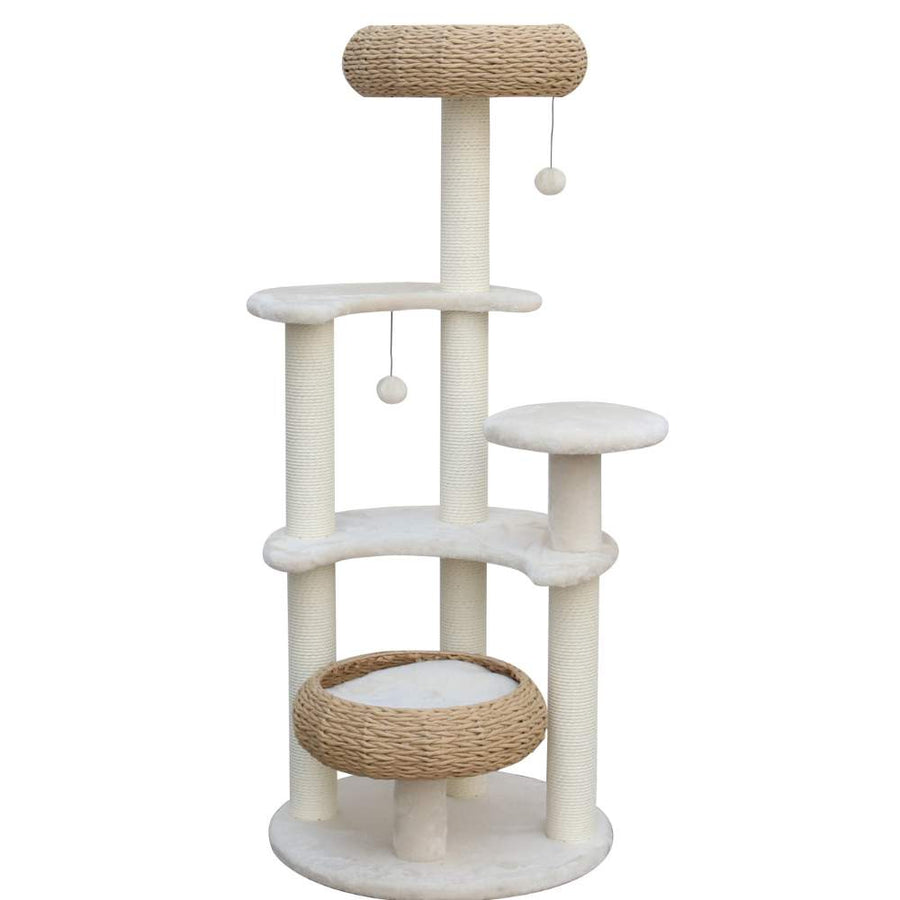
A tall cat tree (typically 120cm or above) provides multiple levels, greater height variation, and more opportunity for the kind of climbing behaviour that keeps cats physically active and mentally stimulated. Tall cat trees suit active cats, young adult cats, and households where the cat spends significant time indoors.
The higher platforms on a tall cat tree give cats the elevated vantage point they instinctively seek, which is particularly useful when positioned near a window, where a high perch combines visual stimulation with warmth and a view of outdoor activity.
For tall cat trees, stability is the most important structural consideration. A tall cat tree tower must have a base that is wide and heavy enough to prevent tipping when a cat jumps between levels at speed.
A large cat tree (or cat tree for large cats) is specifically designed to accommodate the weight, size, and strength of larger domestic breeds, like Maine Coons, Ragdolls, Norwegian Forest Cats, Bengals, and British Shorthairs, which can reach 7–10kg or more.
Standard cat trees are often rated for cats up to 5–6kg per platform; a large cat breed at full weight can exceed this and compromise structural integrity over time.
A big cat tree for large breeds should offer:
If you have a large breed cat and are unsure whether a specific model is appropriate, contact our team with your cat's weight. We can confirm platform ratings before you purchase.
A floor to ceiling cat tree uses a tension pole mechanism to press between the floor and ceiling, providing maximum stability without wall fixings or a heavy freestanding base. The tension mounting means the structure cannot tip, making floor to ceiling designs particularly suitable for:
Floor to ceiling cat trees are typically the tallest and most structurally ambitious cat tree format, often combining multiple platforms, hammocks, hideaway boxes, and sisal scratching elements across two metres or more of vertical space. They require ceilings of a compatible height. Most are adjustable within a range (e.g. 230–270cm), so confirm your ceiling height before purchasing.
A wooden cat tree uses natural timber for the frame and platforms rather than the carpeted particleboard construction of standard cat trees. Wooden cat trees offer a significantly more furniture-like aesthetic and suit modern, Scandinavian, or minimalist interiors where a carpet-covered structure would look out of place.
Advantages of a wooden cat tree:
The trade-off is cost (wooden cat trees are generally more expensive than carpeted equivalents), and scratching surface: natural timber posts may not satisfy scratching needs as effectively as sisal wrapping. Look for wooden cat tree designs that include sisal-wrapped scratching elements alongside the timber frame.
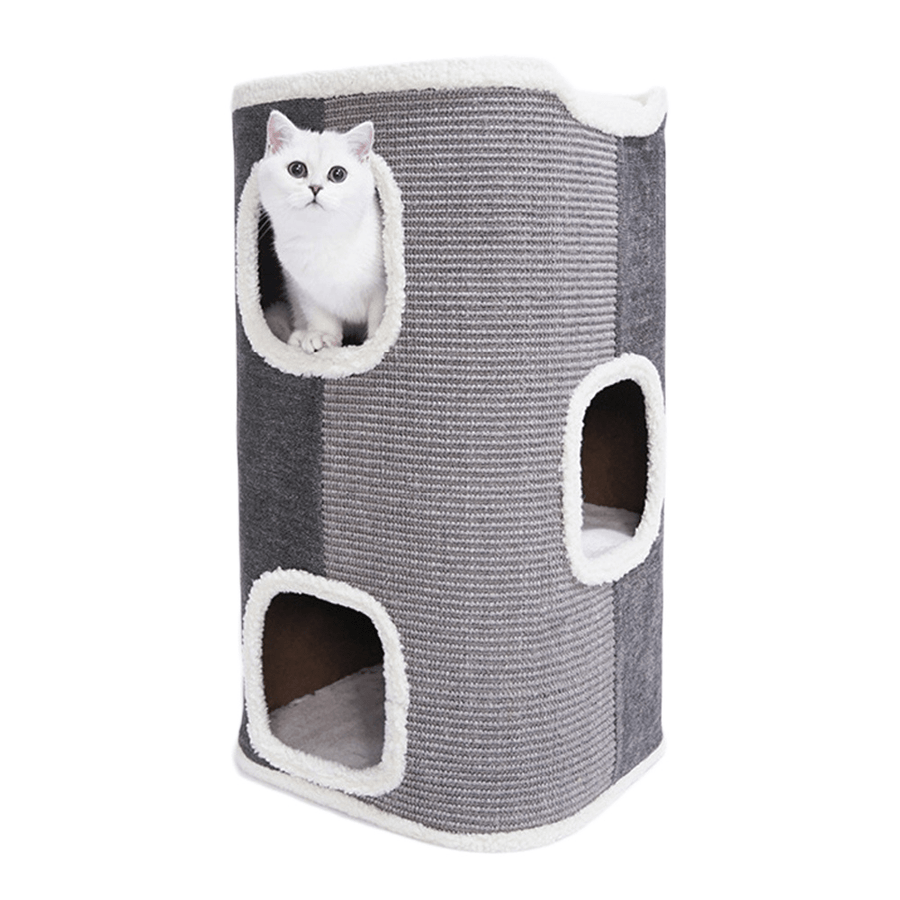
A cat tree house combines a climbing structure with one or more enclosed hideaway boxes; essentially a multi-level cat tree with built-in cat caves or condos at various levels. The enclosed spaces provide the dark, sheltered resting spots that many cats prefer for deep sleep, in addition to the open platforms used for active observation.
Cat tree house designs suit cats that show a preference for enclosed resting spaces. Cats who sleep under furniture, inside boxes, or in tight corners will typically use the enclosed components of a cat tree house more than open platforms.
An outdoor cat tree is built from weather-resistant materials (typically treated timber, UV-stabilised plastic, or marine-grade rope) designed to withstand rain, sun, and temperature variation without degrading. For cats with access to an outdoor area, a dedicated outdoor cat tree extends enrichment beyond the home.
For Australian conditions, outdoor cat tree materials need to withstand significant UV exposure and summer heat. Untreated timber will warp and crack in sustained outdoor exposure; look explicitly for treated or naturally weather-resistant timber such as cedar. Sisal rope degrades more quickly outdoors than indoors; check whether replacement rope elements are available for your model.
Outdoor cat trees should be positioned in partial shade, secured to prevent wind movement, and inspected regularly for moisture damage or insect activity.
The scratching post material significantly affects whether your cat will use it:
Look for cat trees with sisal-wrapped posts as a minimum, ideally with multiple post heights to accommodate both horizontal and vertical scratching postures.
Each platform should be large enough for your cat to lie on comfortably. A cat that hangs off the edge of a platform will not use it for resting. As a practical guide:
Before purchasing any cat tree or cat tower, pet owners should check: does the base footprint match the height? A tree that is 180cm tall with a 40 x 40cm base will tip under the force of a large cat jumping from the top. As a general rule, the base should be at least 40–50% of the tree's height in its narrowest dimension. Wall-anchoring brackets (included with some models or available as accessories) add security for tall trees in households with active or heavy cats.
Most cats do not immediately use a new cat tree. Unfamiliar objects require investigation before a cat will commit to using them. A structured introduction significantly accelerates the process:
Step 1: Position near existing favourite spots
Place the cat tree or cat tower in a location your cat already uses regularly (near their current sleeping spot, beside a window they look out of, or in a room where they spend most of their time). Cats are more likely to investigate a new structure that arrives in familiar territory.
Step 2: Add familiar scent
Rub a cloth on your cat's face (where their scent glands are) and wipe it on the tree's platforms and posts. Alternatively, place a piece of your cat's used bedding on a platform. Familiar scent dramatically reduces the wariness most cats show toward new objects.
Step 3: Use play and food to encourage exploration
Drag a wand toy along the platforms and up the posts to encourage your cat to climb. Place treats at different levels, starting low and working upward, to reward exploration. Do not force your cat onto the tree.
Step 4: Be patient
Some cats begin using a new tree within hours; others take a week or more. Once a cat has rested on the tree and deposited their own scent, uptake increases rapidly. Cats that have previously used scratching posts or elevated furniture will typically adapt faster than cats with no prior experience of vertical structures.
Note:Guidance on cat welfare, enrichment, and product specifications is provided for general information. For cats with mobility limitations, joint conditions, or significant anxiety, consult your veterinarian before selecting a cat tree style.
Measure your dog's standing height and body length, add 5–8cm to each measurement, and compare against the carrier's internal dimensions. Your dog must be able to stand, turn, and lie fully stretched inside the carrier. For airline travel, the carrier must also fit under the seat in front of you. Check your airline's specific dimensions before purchasing.
Yes, provided the carrier meets your airline's specific requirements. For in-cabin travel, most Australian airlines require a soft-sided dog carrier bag no larger than approximately 45 x 35 x 20cm, with a combined pet-plus-carrier weight of 7–10kg. For hold travel, an IATA-compliant hard-sided carrier is required. Always confirm current requirements directly with your airline at the time of booking, as policies change.
For most dogs, two to three hours in a well-fitted, well-ventilated carrier is comfortable for a single journey. For longer trips, plan stops every two hours to allow your dog to stretch, drink water, and toilet. On flights where stops are not possible, ensure your dog has toileted immediately before the journey and has not eaten a large meal within two hours of travel.
Yes, provided the carrier is correctly sized and fitted. The dog must be able to hold their head upright without the neck being compressed, and the carrier must have adequate ventilation. Always check the weight rating: most dog carrier backpacks are rated for dogs up to 6–8kg. For larger dogs, a wheeled carrier is more appropriate. Introduce the backpack gradually so your dog is comfortable with the enclosed, elevated position before taking it on longer outings.Dog backpack carriers suit active owners (such as hikers, cyclists, or urban commuters) who need their hands free while transporting their dog.
There are two main dog backpack carrier formats:
When choosing a dog carrier backpack, look for:
A dog carrier bag is a soft-sided bag carried in one hand or over one shoulder; practical for short trips and vet visits. A dog carrier backpack distributes weight across both shoulders for hands-free carrying, making it better suited to longer distances, outdoor activities, and situations where you need both hands free. Both styles are available as pet carriers for small dogs; the right choice depends on your typical use case and how far you'll be carrying your dog.
A puppy carrier or puppy bag is sized for dogs under approximately 3–5kg. If your puppy will grow beyond this weight, consider purchasing a carrier sized for your dog's adult weight from the start. Most dogs accept a slightly larger carrier more readily than being transferred to a new one as they grow. Always check the weight and size rating of any small pet carrier before purchasing.
Free metro shipping applies to orders over $99. Some larger or wheeled carrier models may be subject to oversized delivery conditions depending on your postcode. Check the product page or contact our team on 1300 268 060 or at customercare@modernpet.com.au to confirm shipping eligibility for your area.
© Modern Pets All Rights Reserved | Terms of Use | Privacy Policy