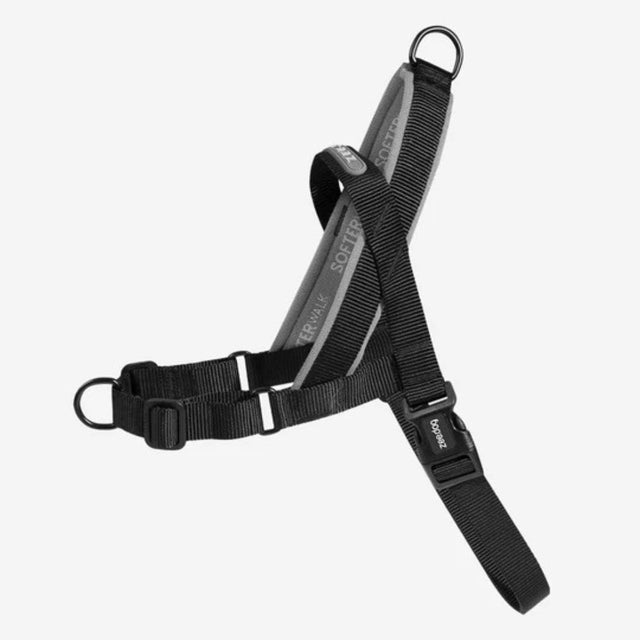
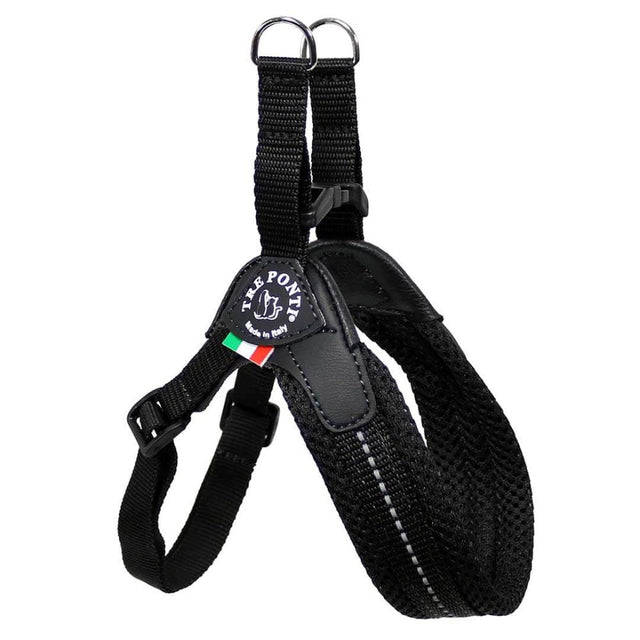
If walks have become a tug of war, the problem usually is not a stubborn dog. It is equipment working against you. A standard back-clip harness can actually make pulling worse by triggering a dog's natural opposition reflex: the harder you pull back, the harder they pull forward. A no pull dog harness flips that dynamic by moving the leash attachment to the chest, so a pulling dog is gently turned back towards you instead of powering ahead.
We have been helping Australian dog owners since 2018, and the question we hear most on walks is how to stop the pulling. Below are the best no-pull dog harnesses available in Australia for 2026, with how they work and how to use them properly.
How a no-pull harness actually works
The mechanism is simple physics. A front clip harness has a D-ring on the chest. When your dog surges forward, the leash pivots them sideways and back towards you, removing the forward momentum they are chasing. There is no choking, no pinching and no pain, just a consistent, gentle consequence that makes pulling unrewarding. Pair that with a few weeks of calm, consistent walking and most dogs ease off considerably.
Some harnesses go a step further with a padded control handle on the back, giving you a direct hold for crossing roads, passing other dogs or steadying an excitable pup.
What to look for in an anti-pull harness
-
A front chest D-ring: the non-negotiable feature that makes a harness genuinely no-pull rather than just comfortable.
-
A control handle: useful for close-quarters control and an extra safety hold.
-
A snug, adjustable fit: a loose harness lets a determined dog twist out, so adjustability matters.
-
Padding: spreads pressure and prevents rubbing behind the legs, especially on strong pullers.
-
Dual clips: front for training, back for relaxed walks once manners improve.
How to use a no-pull harness for training
A harness is a training tool, not a cure. Clip the lead to the front ring, and the moment your dog pulls, stop or change direction so they learn that pulling gets them nowhere. Reward them for walking by your side on a loose lead. Keep sessions short and consistent, and within a few weeks most dogs work out that a relaxed lead is the fastest way forward. For strong or reactive dogs, a double-ended lead clipped to both the front and back rings gives you the most control.